
Sources: This Old House roof cost guide (updated 2026) and Bob Vila's roof replacement cost guide (updated April 16, 2024, citing HomeAdvisor and Angi). National figures, not Bluebonnet prices.
Roof replacement cost in 2026 averages about $5.16 per square foot for an asphalt shingle roof in the US, which puts a typical 1,700 square foot roof near $8,772. Metal and tile cost three to four times as much per foot. Where your house lands depends on the size and pitch of the roof, what has to come off, the condition of the decking underneath and the material you pick. This guide walks through each of those for homes around Aledo and Fort Worth, with the math to estimate your own roof before anyone climbs a ladder.
If you would rather skip the math, our roof replacement page explains how we price a new roof: a free inspection by the owner and a written estimate sent to your email.
What's in this guide
- What does a roof replacement cost in 2026?
- Roof replacement cost by roof size
- How to estimate the size of your own roof
- What drives the price up
- Fort Worth re-roof rules that affect the price
- What goes into a roof replacement quote from us
- Common questions
What does a roof replacement cost in 2026?
A full roof replacement in the US typically costs between $5,727 and $12,418, with a national average of $9,072, according to Bob Vila's guide, which draws on HomeAdvisor and Angi project data. This Old House puts the average asphalt shingle roof at $5.16 per square foot installed, or $8,772 for the average 1,700 square foot roof.
The two sources measure slightly different things. Bob Vila's range covers projects of every material and size that homeowners reported. This Old House prices builder-grade material on a standard-shaped, low-slope roof, so it is a cleaner starting point for your own math. Neither one is a quote: they tell you whether a number you are given is in a normal place.
Material changes the picture more than anything else. Here is what This Old House lists per square foot, installed:
| Material | Average cost per sq ft | Compared with asphalt |
|---|---|---|
| Asphalt shingle | $5.16 | Baseline |
| Wood shake | $13.15 | About 2.5x |
| Metal | $19.30 | About 3.7x |
| Clay tile | $22.21 | About 4.3x |
Source: This Old House, "How Much Does a New Roof Cost?" (updated 2026). Builder-grade materials, medium labor.
Labor is the biggest single piece of that cost. This Old House puts it at about 65 percent of the total project, and Bob Vila puts it near 60 percent. That is why the shape of the roof and the work involved matter so much: they change the hours, not just the bundles of shingles.
Roof replacement cost by roof size
This Old House's size table shows how the total scales. These are national averages for a straightforward roof, not a price for a specific house.
| Roof area | Asphalt | Metal | Clay tile |
|---|---|---|---|
| 1,500 sq ft | $7,740 | $28,950 | $33,315 |
| 2,000 sq ft | $10,320 | $38,600 | $44,420 |
| 3,000 sq ft | $15,480 | $57,900 | $66,630 |
Source: This Old House (updated 2026).
A 1,000 square foot asphalt roof works out to about $5,160 at the same rate, though very small jobs often cost more per foot because setup, haul-off and the trip itself do not shrink with the roof.
How to estimate the size of your own roof
The number in those tables is roof area, not the square footage of your house. A sloped roof has more surface than the floor under it, and the overhang adds more. Two quick rules get you close.
Start from the footprint, not the living area
A 2,000 square foot single-story house has about a 2,000 square foot footprint. A 2,000 square foot two-story house sits on roughly half that, so it has far less roof. That is why a 4,000 square foot two-story home can have about the same roof as a 2,000 square foot ranch home.
Multiply by the pitch
Pitch is how many inches the roof rises for every 12 inches it runs. The steeper it is, the more surface each foot of footprint carries. The multiplier comes straight from geometry:
| Pitch | Multiply footprint by | Example: 2,000 sq ft footprint |
|---|---|---|
| 4/12 (low) | 1.05 | About 2,110 sq ft of roof |
| 6/12 (common) | 1.12 | About 2,240 sq ft of roof |
| 8/12 (steep) | 1.20 | About 2,400 sq ft of roof |
| 12/12 (very steep) | 1.41 | About 2,830 sq ft of roof |
Add a little for the eaves and you have a working number. A 1,200 square foot single-story house with a 6/12 roof comes to roughly 1,350 square feet of roof, or about $7,000 in asphalt at the national rate. Roofers count in "squares," and one square is 100 square feet, so that roof is about 13.5 squares.
What drives the price up
The most expensive part of replacing a roof is usually the labor, and anything that adds hours adds cost. These are the items that move a quote the most.
Tear-off and old layers
Bob Vila suggests budgeting an extra $1,000 to $1,500 to remove an existing roof. A house with two layers of old shingles takes longer to strip and produces more debris to haul off. Under the International Residential Code, a new layer cannot go over a roof that already has two or more layers, or over one that is water-soaked or badly deteriorated, so those roofs come all the way down to the deck (IRC 2021, Section R908).
Decking repairs
The decking is the plywood or OSB the shingles are nailed to. Nobody can see all of it until the old roof is off. Bob Vila notes that rotted timbers can add $1,000 to $10,000 to a job, which is the widest swing in any roof estimate and the reason a good estimate explains how decking repairs are handled before work starts.
Pitch, height and shape
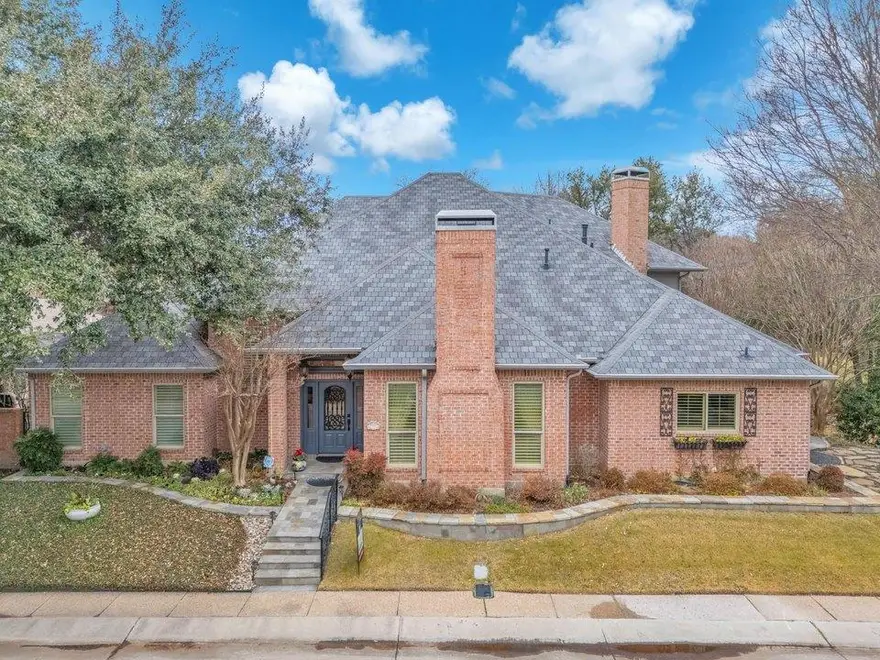
Steep roofs need more safety gear and slower work. This Old House lists steep pitches, multiple valleys and dormers, and homes over two stories as cost drivers. A plain gable roof on a ranch home is the cheapest shape to replace. A roof with many hips, valleys and chimneys, like the one pictured above, takes far more flashing and cutting.
Material and upgrades
Architectural shingles cost more than the older flat three-tab style but give the roof more depth and come in more colors. Switching from shingle to tile or slate also means checking that the framing can carry the extra weight. If you are weighing a standing seam metal roof or tile or slate, a replacement is the easiest time to change, because the old roof is coming off anyway.
Fort Worth re-roof rules that affect the price
The City of Fort Worth publishes a roofing FAQ for homeowners, roofers and insurers (updated June 2025). A few of its answers show up directly in a quote:
- Permits. Replacing only the shingles on a single-family home does not need a permit. Replacing any decking does.
- Sheathing. If the existing decking met code when the house was built and is still in good condition, it does not have to be replaced. New decking cannot be laid over old decking.
- Drip edge and crickets. Both are required on a re-roof even if the old roof did not have them. A cricket is the small peaked section that sheds water around the uphill side of a chimney.
- Ice barrier. Not required in Fort Worth, because the area has no history of ice damming.
Source: City of Fort Worth Development Services, Roofing FAQ (revised June 2025).
Other cities in the area, such as Aledo, Weatherford, Benbrook and Burleson, set their own permit rules, so check with your city or ask whoever writes your estimate how it is handled.
What goes into a roof replacement quote from us
We do not give roof prices over the phone, because the items above only show up on the roof itself. At Bluebonnet Construction & Roofing, owner Cody Taylor does every inspection and writes every estimate. The inspection is free, and he looks at the whole roof: every slope, the ridge, the valleys and the flashing around chimneys and walls. If a repair will do the job, he will tell you that.
The written estimate comes to your email and lays out what the job includes and the material going on. That makes it easy to compare against other estimates line by line. When you compare, check that each one names the same material, covers the same parts of the roof, and says how decking repairs will be handled. Two prices are only comparable when the scope behind them matches.
If hail or wind is the reason you are looking, the process starts the same way. Our storm damage roofing page explains how the inspection and the insurance side work. The claim is between you and your insurance company, and the decision to file is yours.
Ready for a real number on your house? Book a free inspection on our roof replacement page, or call us at our office in Aledo. We work across Fort Worth, Arlington and the rest of our service area.
FAQ
Can you repair a roof without replacing it?
Often, yes. Missing shingles, a leak around a pipe boot or flashing, or damage on one slope can usually be repaired. A replacement makes more sense when the shingles are worn across the whole roof or leaks keep showing up in new places. A free inspection tells you which one your roof needs.
What time of year is the cheapest to replace a roof?
There is no fixed cheap season. Prices follow demand, and in North Texas demand jumps after a big hail or wind storm, when crews book up for weeks. If your roof is aging but not leaking, getting estimates before storm season or during a quiet stretch gives you more choice of dates.
Is roof replacement tax deductible?
Not for most homeowners in the year you pay for it. The IRS lists a new roof as an improvement that adds to your home's cost basis in Publication 523, which can lower the taxable gain when you sell. Repairs and maintenance do not count. Ask a tax professional about your own situation.
What is the cheapest way to replace a roof?
An asphalt shingle roof on a simple roof shape is the lowest-cost full replacement. Fixing only what needs fixing, keeping the existing decking where it is sound, and comparing written estimates with the same scope all keep the price down. An overlay costs less upfront, but code does not allow one over two existing layers or a water-soaked roof.
Do I need a permit to replace my roof in Fort Worth?
According to the City of Fort Worth roofing FAQ, replacing only the shingles on a single-family home does not need a permit, but replacing any decking does. Other cities set their own rules, so check with your city before work starts.